
Reading Old Cairo architecture through different spaces
Old Cairo architecture brings together church interiors, historic streets, teaching complexes and domed mosques across different visiting areas. A useful approach is to compare how a building organises movement: the sequence through a church, the relationship of courtyard and iwans, or the transition from a mosque courtyard into its prayer hall. Those comparisons give the day a focus without requiring specialist knowledge.
The churches around Mar Girgis and the Islamic monuments belong to different routes, so choose the buildings before choosing transport. The Coptic Cairo guide covers the church quarter, while the Islamic Cairo overview introduces the streets and mosques. Cultural tours visiting these buildings can support that comparison; select them for their named stops and included guiding rather than expecting a specialist architecture seminar.
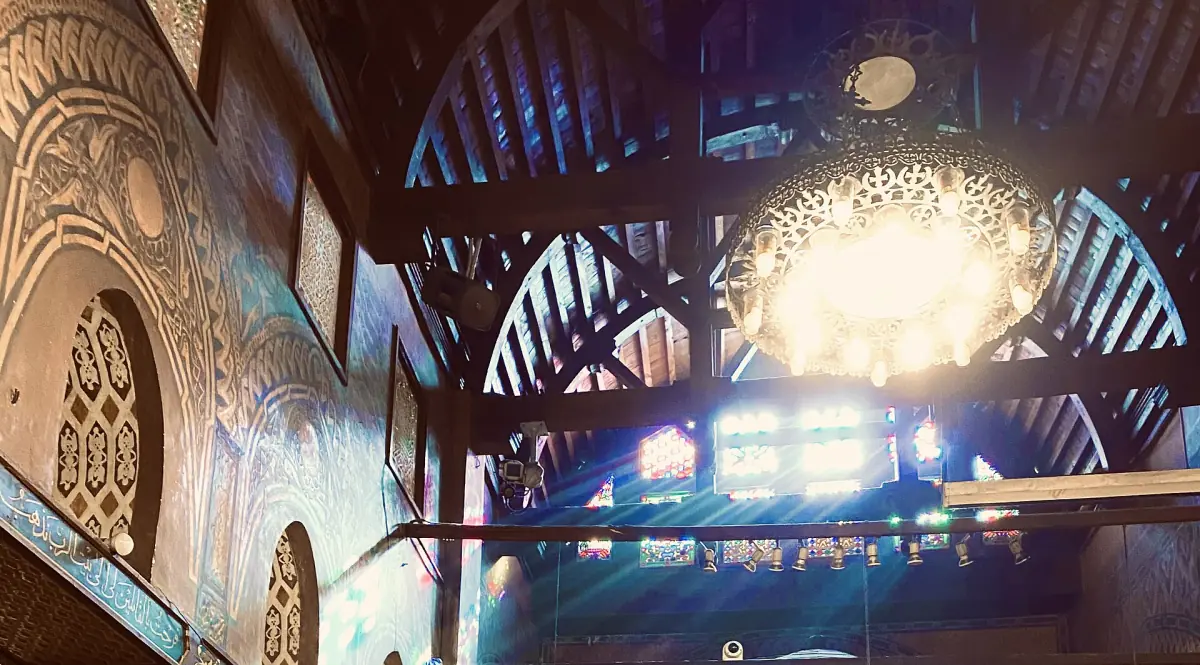
Visits to historic buildings
The private mosque route includes lunch and entry; the Al-Muizz route includes a meal and historic sites. Choose the Sultan Hassan visit for a focused private guide.
Hand-picked tours, booked through GetYourGuide. Prices are indicative starting prices in US dollars (as of October 2026). Tap a tour for live availability and the current price in your currency.
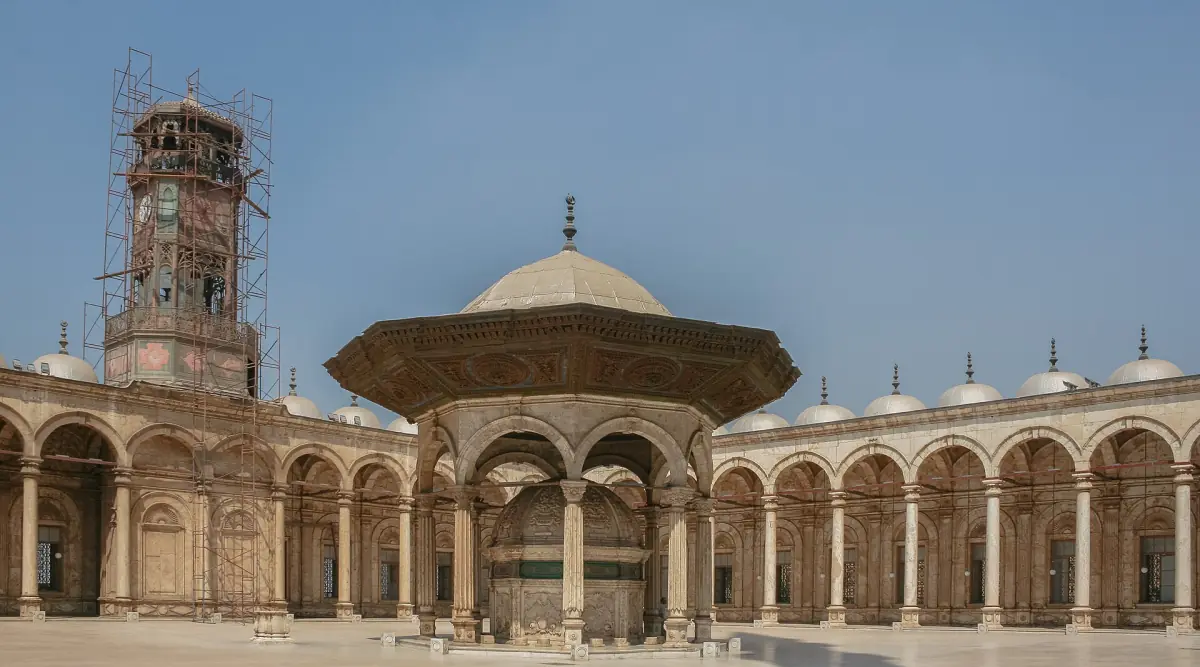
Private mosque route with lunch
- Private tour guide
- Entrance fees to mentioned sites
- Lunch meal in a local restaurant
Transfers are in a private air-conditioned vehicle. Confirm access to religious sites before booking.
Check availability →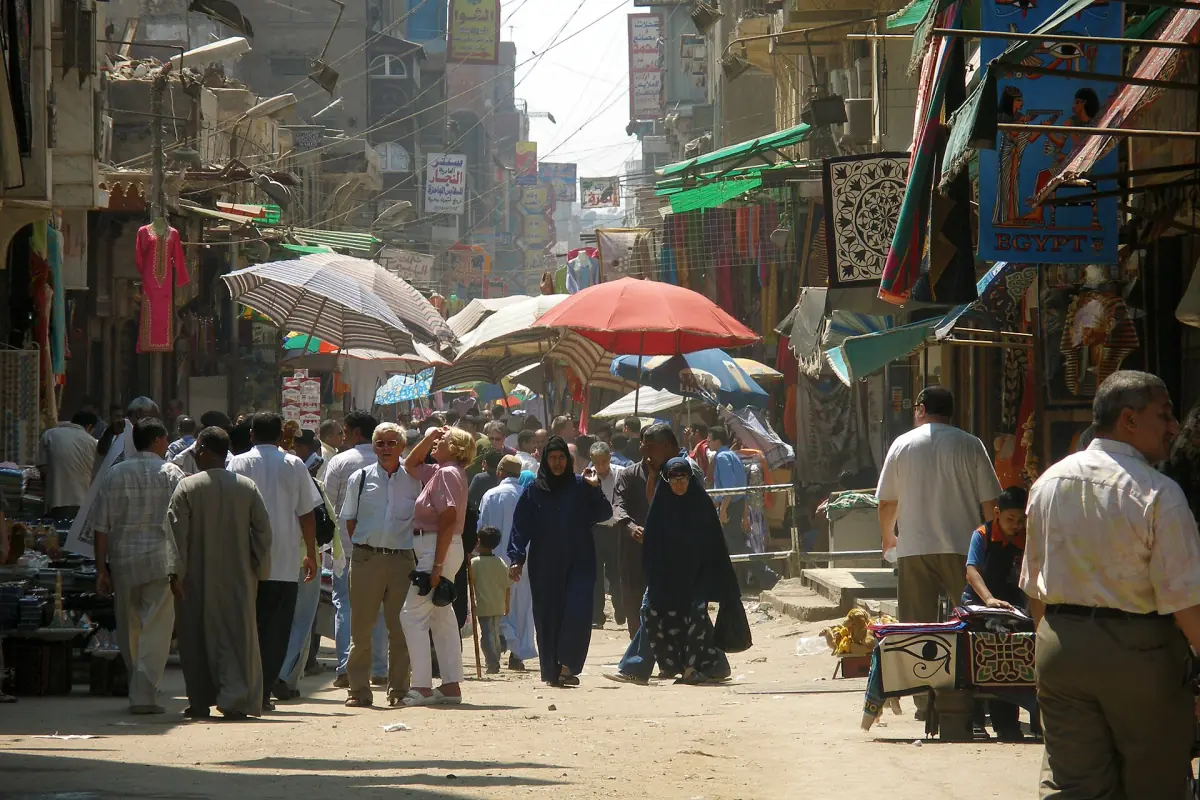
Al-Muizz and historic buildings with a meal
- Private tour guide
- Entrance fees to mentioned sites
- Dinner meal at Studio Misr Restaurant
Private air-conditioned transfers are included. Confirm the meal time with the operator.
Check availability →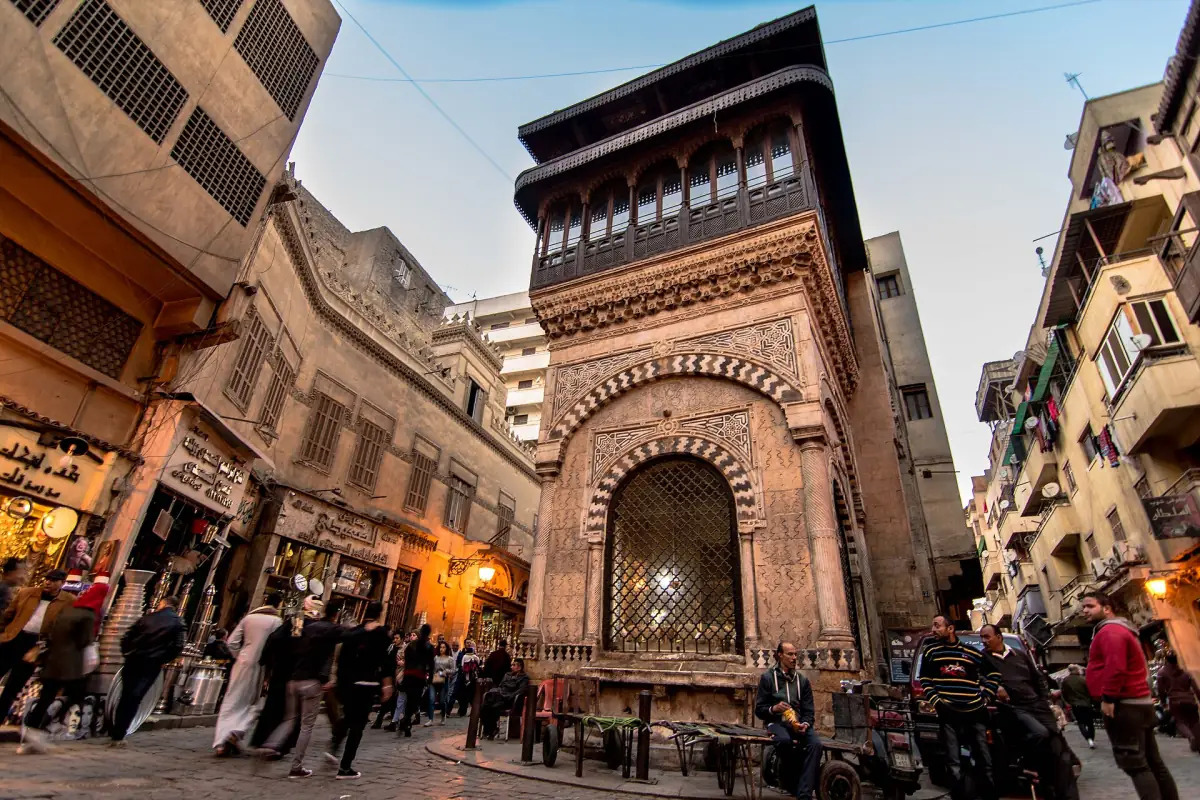
Sultan Hassan mosque and madrasa visit
- Private guide
- Entrance tickets to all mentioned sites
- Bottled water
Private air-conditioned car transfers and a Cairo shopping tour are included.
Check availability →Cultural tours through Cairo’s historic buildings
Private mosque visits connect Muhammad Ali, Sultan Hassan and Al-Azhar; another route pairs Qalawun with the street and park, while a shorter visit focuses on Sultan Hassan.
Basilical churches and the Hanging Church
Abu Serga has a basilical arrangement with a vestibule, nave and sanctuary. This vocabulary gives you a straightforward way to understand the sequence of its interior. Its association with the Holy Family belongs to religious tradition. Keep that distinction in mind when listening to stories about the site, and let the arrangement of the church be a separate subject of attention.
The Hanging Church stands above remains of the Roman fortress of Babylon. Its wooden ceiling is described in connection with Noah’s Ark, and its marble pulpit dates to the eleventh century. Look at the ceiling and pulpit as individual features within the church rather than assigning every part of the building to the same date. Together with the fortress setting, they offer a different architectural reading from the mosque courtyards.
For a church-focused day, start with the interiors that interest you and give each one time. Combining churches and mosques is also possible, but leave a deliberate journey between the visiting areas. The transport guide explains the Mar Girgis approach to the Coptic quarter; that arrival point should not be treated as the entrance to every historic building discussed here.
The Fatimid city and Qalawun
The Al-Muizz corridor runs from Bab al-Futuh to Bab Zuweila and includes religious, domestic, commercial and military buildings. The preserved medieval street structure is part of what makes Historic Cairo significant. For an architectural walk, pay attention to the relationship between a building’s entrance and the surrounding street, and to the way different functions sit within the same urban route.
The Qalawun complex is among the monuments listed under the Al-Muizz ticket. That ticket costs 220 EGP for foreign adults and 110 EGP for foreign students; Bayt al-Suhaymi and Wekalet Bazaraa are excluded. The street guide separates monument entry from evening formats. A five-hour private street-and-park route includes Qalawun and Bayt al-Suhaymi, a guide, transfers, named-site admission and a meal. Confirm the meal timing when arranging that particular visit.
Sultan Hassan: courtyard, four iwans and madrasas
Sultan Hassan’s complex was commissioned in 1356 to 1362. Its courtyard has a fountain, with four iwans and four madrasas associated with the Sunni schools of law. An iwan is the architectural focus to look for here: viewing the open halls around the courtyard helps connect the monument’s spatial arrangement with its religious and teaching functions.
The Sultan Hassan visit guide also covers Rifai opposite. Rifai was completed in 1912 after long interruptions and combines prayer space with burial use. These are different historical chapters facing the same square. The two buildings share their own combined ticket, listed at 220 EGP for foreign adults and 110 EGP for foreign students. Keep that admission separate from the Citadel when planning an independent visit.
Muhammad Ali Mosque and the domed prayer hall
Within the Citadel, Muhammad Ali Mosque offers an Ottoman-influenced comparison: a courtyard and prayer hall, a central dome and half-domes. Follow the shift from the open courtyard to the domed interior. This is a different way of structuring religious space from the courtyard-and-iwan arrangement at Sultan Hassan, making the two useful companions for a day focused on buildings.
The mosque is included in Citadel admission, listed at 550 EGP for foreign adults and 275 EGP for foreign students. Its closing time is 16:00, earlier than the grounds at 17:00. Put the mosque before a late addition to the itinerary if its interior is a priority. Al-Azhar adds another historical context to a mosque route, but its foundation date should not be used to date the entire present complex.
Choosing a cultural tour by the buildings it visits
The six-hour private mosque route links Muhammad Ali, Sultan Hassan and Al-Azhar, with private guiding, vehicle transfers, admission to the stated sites and lunch. Drinks during lunch and pickup outside the stated area cost extra. It suits comparisons between major mosques. Confirm access to the religious sites for your planned visit when arranging the route.
A shorter two-hour Sultan Hassan mosque-and-madrasa visit includes a private guide, private air-conditioned transfers, hotel pickup and return, entry tickets and bottled water. A shopping stop is also listed. Choose it when the focused monument visit suits your day; the product had no customer rating at the November 2026 data snapshot. Across all these visits, cover shoulders and legs, carry a headscarf and follow the instructions inside each religious building.
Frequently asked questions
Are these specialist architecture tours?
They are cultural visits to the buildings discussed here. Choose according to the named monuments, guiding and transport included.
Which building has four iwans?
Sultan Hassan has a courtyard with a fountain, four iwans and four madrasas associated with the Sunni schools of law.
Is the Hanging Church in the same visiting area as Al-Muizz?
The Hanging Church is in the Coptic quarter near Mar Girgis. Plan a separate journey when combining it with the Al-Muizz corridor.