
Reading Old Cairo history through its districts
Old Cairo history is easier to follow when the Roman fortress setting, Fustat and Fatimid Cairo are treated as successive chapters in different places. The churches around Mar Girgis form one visiting area; the medieval streets of Islamic Cairo and the citadel require separate planning. A historical route can connect them, but the name Old Cairo should not suggest a single enclosed attraction with one entrance.
Start with the question that interests you: the reuse of a fortified site, Christian traditions and art, or the development of an Islamic capital. The Coptic Cairo guide explains the church district, while the Islamic Cairo guide introduces the later urban setting. Reading those places in sequence gives individual buildings a clearer role than a checklist of unrelated stops.
Cairo history tours
The Babylon route includes entry and private transport; the narrower church visit includes lunch. The mosque and church combination offers another route across historic districts.
Hand-picked tours, booked through GetYourGuide. Prices are indicative starting prices in US dollars (as of October 2026). Tap a tour for live availability and the current price in your currency.
Historic mosques and Coptic churches
- Entrance fees to itinerary attractions
- Lunch included
- Professional English guide
German, French or Spanish guiding requires a paid language option.
Check availability →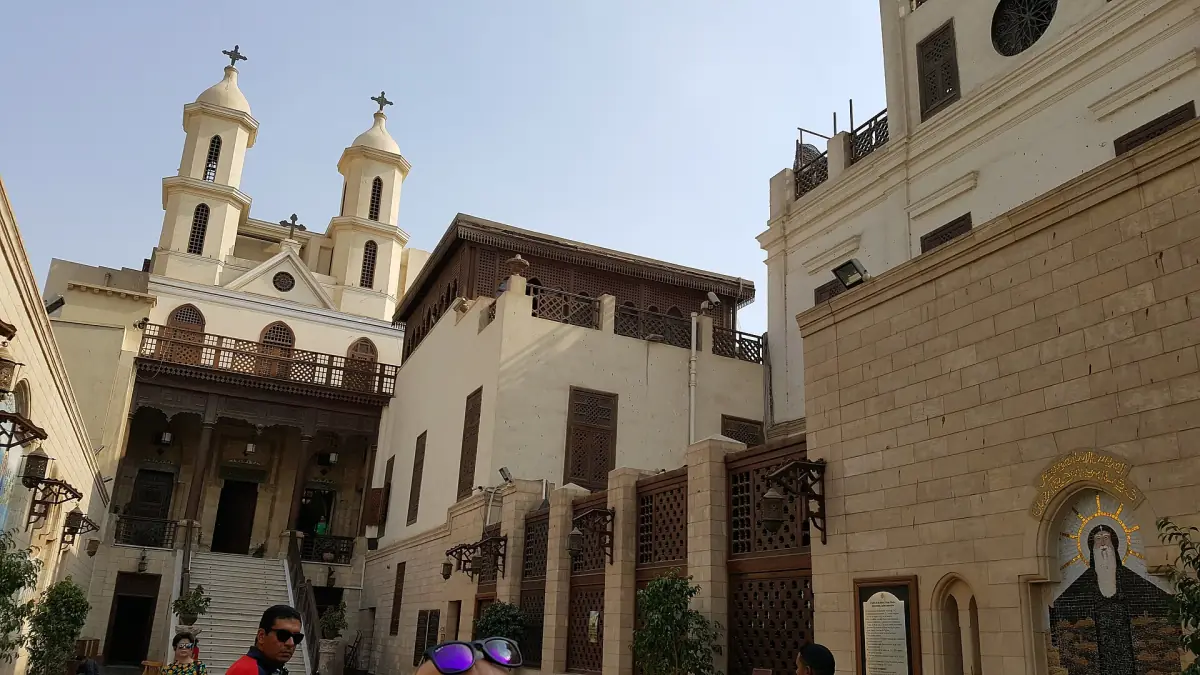
Coptic Cairo churches and Babylon
- Entry fees
- Guide on site
- Bottle of water
The transfers are by private air-conditioned vehicle.
Check availability →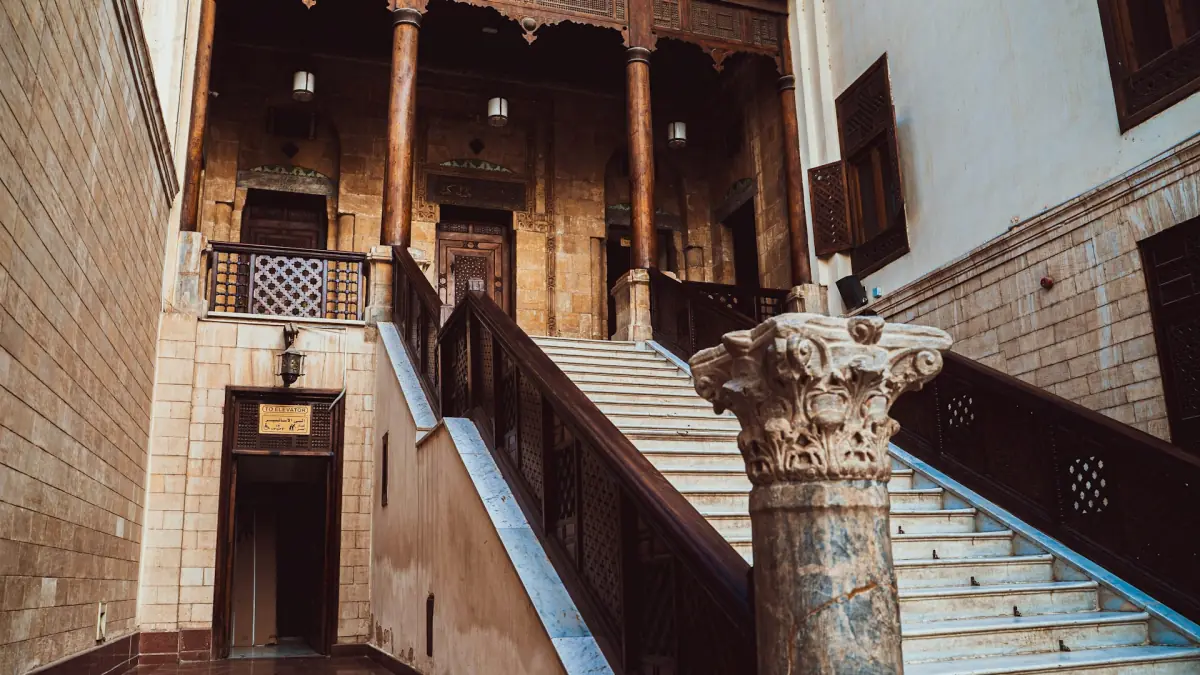
Coptic church visit with lunch
- Entry fees
- Guide on site
- Lunch included
Private air-conditioned transportation and bottled water are included.
Check availability →Routes through Cairo’s historical layers
Babylon and church visits, a focused Abu Serga and St. Barbara route, or Coptic and Islamic monuments with lunch; German guiding on the combined route costs extra.
Ancient history and archaeology at Babylon
Babylon provides the Roman fortress context for the Coptic district. Surviving walls and the position of the Hanging Church above fortress remains make the relationship between older masonry and later religious buildings especially useful to observe. The Hanging Church is therefore a strong starting point for understanding how the district developed, rather than a reason to assign every nearby church the same age.
Archaeology here is a way of reading surviving structures. Plan around the public places on your chosen route and discuss any special access separately. A route mentioning Babylon should be understood through its listed stops, not as a promise of excavation visits or entry into every tower. Distinguish what a guide explains from the rooms and areas actually included in the visit.
Churches, tradition and the move towards Fustat
Abu Serga links a basilical church layout with the religious tradition of the Holy Family’s stay in Egypt. Its association with the Holy Family belongs to religious tradition; it should not be read as an independently dated event established by the building itself. Leave room for that distinction when listening to a guided explanation. Ben Ezra adds a different strand through its synagogue interior and the Geniza documents now dispersed among libraries worldwide.
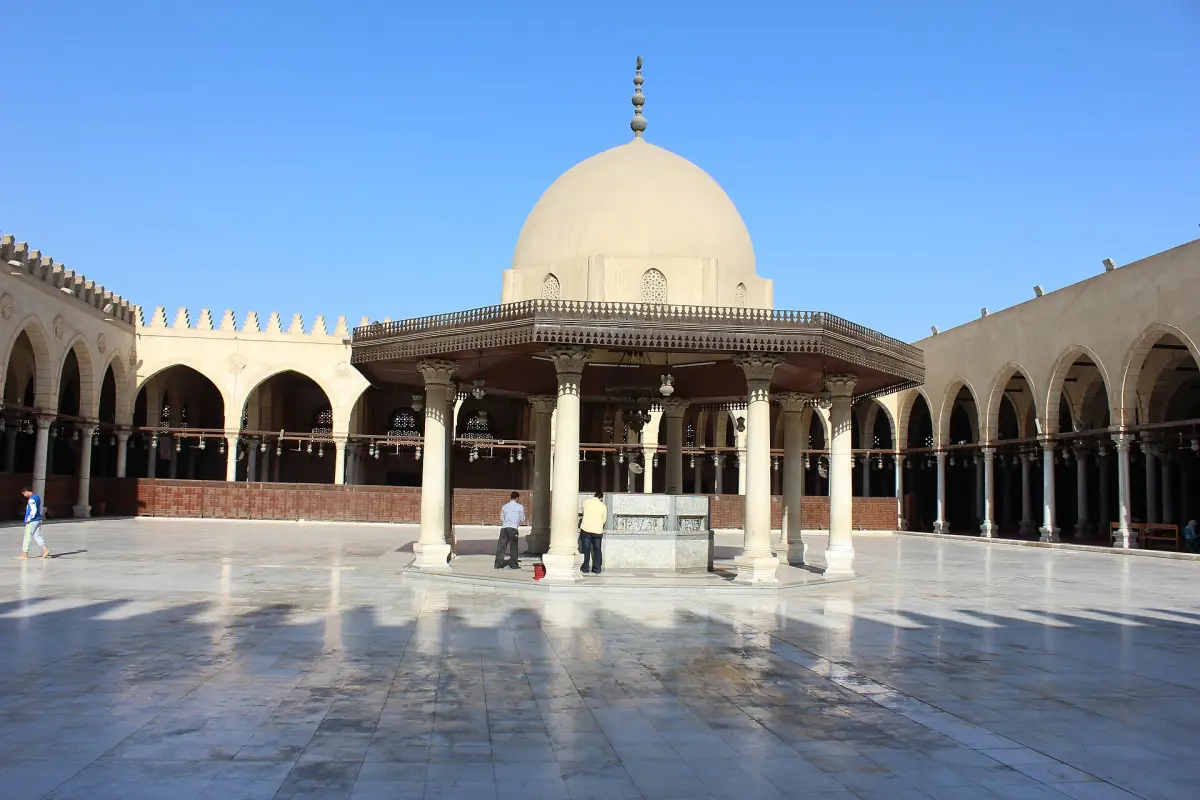
Fustat became Egypt’s first Islamic capital in the seventh century. It preceded the Fatimid foundation and should be treated as a separate stage of urban development. The Amr ibn al-As Mosque represents an early Islamic foundation, but its present appearance largely reflects twentieth-century reconstruction. The courtyard and arcaded halls illustrate the need to separate the history of an institution from the age of the fabric visible today.
Fatimid Cairo and the UNESCO city
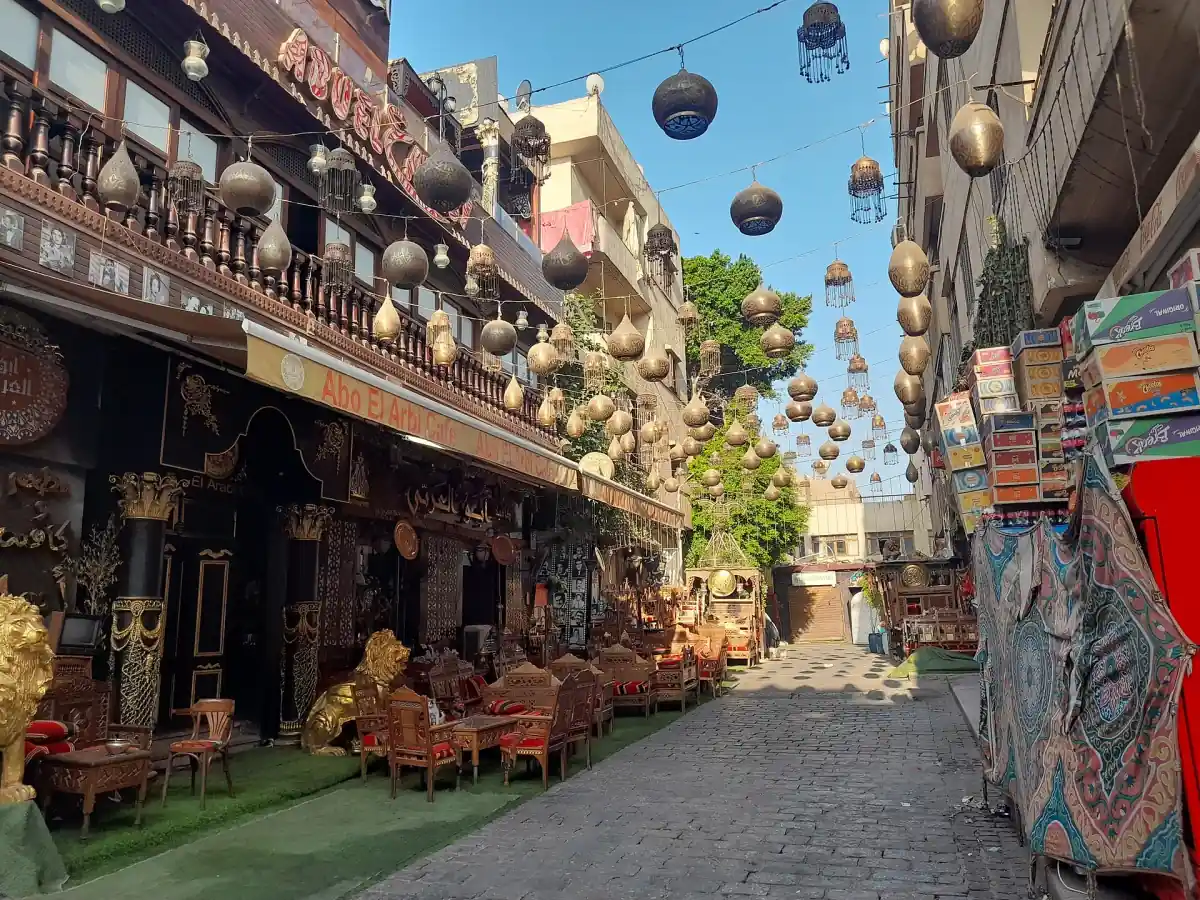
Fatimid Cairo was founded in 969. The Al-Muizz corridor, running between Bab al-Futuh and Bab Zuweila, helps explain a city shaped by religious, domestic, commercial and military buildings. Later additions remain part of the historical streetscape. Reading an avenue as a whole reveals how gates, places of learning and worship, and everyday circulation belong to the same urban story.
Historic Cairo entered the UNESCO World Heritage List in 1979. Its significance concerns historic urban areas and their monuments, rather than a single attraction. Continue with Al-Muizz Street for a walking-focused visit, or the architecture guide to compare building forms. Saladin’s citadel, begun in 1176, and the later mosques add further chapters beyond the Fatimid foundation.
The Coptic Museum and the history of art
The Coptic Museum opened in 1910 and was established by Marcus Simaika Pasha. Manuscripts, icons, carved wood and wall paintings recovered from churches and monasteries offer another way into the district’s history. Egyptian, Greco-Roman, Byzantine and Ottoman influences make this an opportunity to examine artistic connections rather than expecting a simple division between isolated cultural periods.
Give the museum its own place in the day. Its admission for foreign adults is 280 EGP and for foreign students 140 EGP. A church route and a museum visit are different commitments of time and admission. Choose between spending longer with the buildings themselves and adding collection-based interpretation; the museum is a separate visit from the church tours described here.
National Museum of Egyptian Civilization as an additional visit
The National Museum of Egyptian Civilization on El-Fustat Road offers a broader exhibition context, including its Royal Mummies Gallery. Treat it as an additional museum outing when planning a history-focused stay. The routes offered on this page concentrate on churches, Babylon or a combination with Islamic monuments; the museum has its own admission and visiting arrangements.
The Babylon route includes private vehicle transfers, entry fees and a guide on site, without lunch. The narrower Abu Serga and St. Barbara route includes entry, a guide on site and lunch. The combined Coptic and Islamic route brings together Al-Hakim, Qalawun, St. Georg and the Hanging Church, with admission and lunch; German guiding is a paid language option. Use the tour comparison to choose the historical emphasis that fits your day.
Questions about your visit
Is Fustat the same foundation as Fatimid Cairo?
Fustat dates to the seventh century; Fatimid Cairo was founded later, in 969. They are different chapters and visiting areas.
Is the Holy Family connection a historical certainty?
The association at Abu Serga is a religious tradition. It should be described in those terms.
Does a church tour include the Coptic Museum?
Plan a separate museum visit and admission. Foreign adult admission is 280 EGP; foreign student admission is 140 EGP.