
Understanding Islamic Cairo before choosing a route
Islamic Cairo is a historic urban area of mosques, madrasas, fountains and medieval streets. It is a different visiting area from the Coptic churches around Mar Girgis. Start by choosing whether the day should follow the Fatimid streets, compare major mosques, or connect Islamic and Coptic sites by vehicle. That decision matters more than collecting the longest possible list of stops.
The UNESCO property Historic Cairo was inscribed in 1979 and includes historic urban districts rather than a single attraction behind one entrance. The Al-Muizz Street guide follows a particular street corridor; this page explains the wider setting. For a visit spanning churches and mosques, the Old Cairo tour comparison helps distinguish a walking route from a city visit with transport.
Tours of Islamic Cairo
Choose the mosque and gate route for its listed visits, or the private mosque route for lunch and a private guide. The combination also covers Coptic churches.
Hand-picked tours, booked through GetYourGuide. Prices are indicative starting prices in US dollars (as of October 2026). Tap a tour for live availability and the current price in your currency.
Private mosque route with lunch
- Private tour guide
- Entrance fees to mentioned sites
- Lunch meal in a local restaurant
Transfers are in a private air-conditioned vehicle. Confirm access to religious sites before booking.
Check availability →
Historic mosques and Coptic churches
- Entrance fees to itinerary attractions
- Lunch included
- Professional English guide
German, French or Spanish guiding requires a paid language option.
Check availability →
Historic mosques and city gates
- Egyptologist guide
- Entrance fees
- Lunch included
Transportation is included, with Al-Azhar, Al-Muayyad and Al-Hakim among the listed visits.
Check availability →Mosque tours through Islamic Cairo
Routes link Al-Azhar and the historic gates, combine major mosques with a private guide, or continue to the Hanging Church and St. George.
Al-Azhar and the Fatimid city
Fatimid Cairo was founded in 969, later than Fustat. Al-Azhar was established in 970 to 972, initially associated with Shiite teaching and later with a Sunni scholarly tradition. These beginnings help explain its importance, but the present complex should be read as a building with successive phases rather than an unchanged survival from its foundation.
Plan Al-Azhar as a religious visit as well as an architectural stop. Its courtyard and arcades make sense alongside the surrounding historic city, while a guide can connect the mosque with the wider Fatimid story. Confirm the current visitor arrangements for the day you intend to go, particularly if an interior visit is central to your plans. Keep that question separate from the opening hours of other monuments on the same route.
Bab Zuweila and the medieval street structure
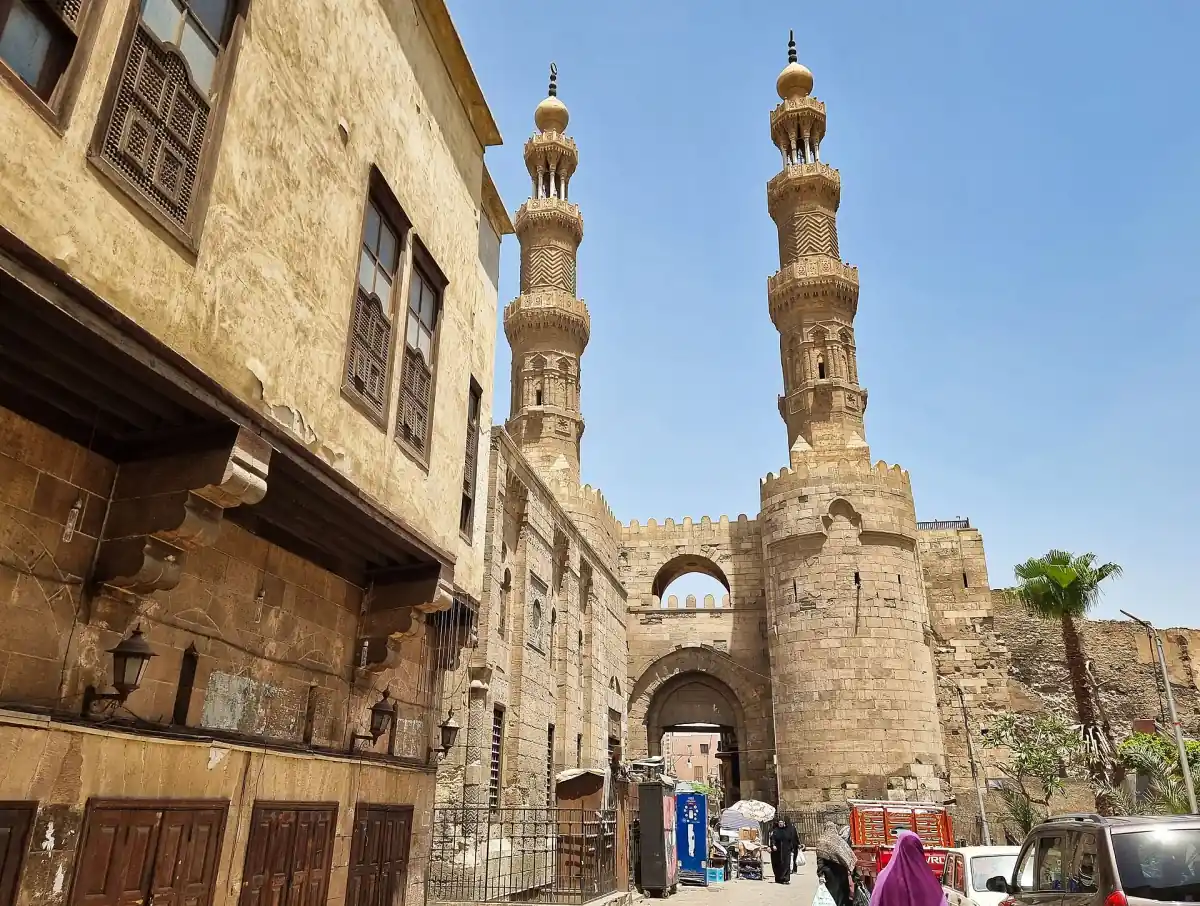
Bab Zuweila marks the southern end of the Al-Muizz corridor, with Bab al-Futuh at its northern end. The southern gate was built in 1092. Its two semicircular towers belong to the gate, while the minarets of the adjoining al-Muayyad Mosque were added later, in 1415 to 1421. Looking at those layers is more useful than assigning the whole silhouette to one century.
Admission at Bab Zuweila is listed at 100 EGP for foreign adults and 50 EGP for foreign students, with visitor hours of 09:00 to 17:00. If a tower or minaret ascent is important, ask about access locally before shaping the visit around it. The street itself and the interiors of individual monuments should be treated as different parts of the day, with their own ticket and access arrangements.
Separate routes to the Citadel and Sultan Hassan
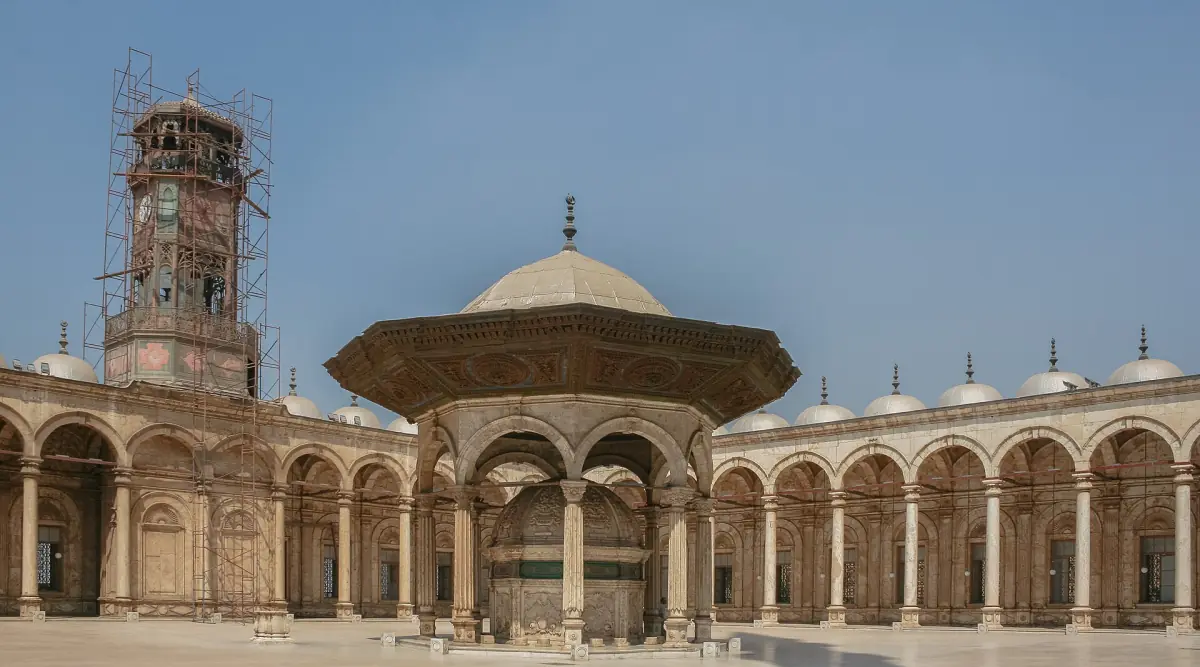
The Cairo Citadel and Muhammad Ali Mosque form a separate visiting stop from the Al-Muizz street corridor. The Sultan Hassan and Rifai complex also has its own combined admission. Build the day around the places you most want to enter, leaving the links between visiting areas as a deliberate transport decision.
A six-hour Islamic-sites route includes Al-Azhar, al-Muayyad, Bab Zuweila, Al-Hakim and historic gates, together with a guide, transport, entrance fees and lunch; drinks are extra. A different six-hour private mosque route visits Muhammad Ali, Sultan Hassan and Al-Azhar with a private guide, transfers, admission and lunch. Drinks at lunch and pickup outside the stated area cost extra. Confirm religious-site access when arranging either route.
Fustat and Amr ibn al-As
Fustat belongs to an earlier chapter: it was an Islamic foundation in the seventh century and became Egypt’s first Islamic capital. It is not the same founding place as the later Fatimid city. The Amr ibn al-As Mosque preserves that early religious association, while the present building is largely a twentieth-century reconstruction with arcaded halls.
For a combination with the churches, a five-hour route connects Al-Hakim and Qalawun with St. George and the Hanging Church, including entrance fees and lunch. English guiding is included; German, French and Spanish require the paid language option. Choose it for that combination of places. For more chronological context, continue with the history of Old Cairo rather than treating all Islamic buildings as contemporaries.
Khan el-Khalili
The bazaar belongs to the historic street setting and can be a separate part of the outing. Keep detailed shopping planning with the Khan el-Khalili bazaar guide. Allow that visit its own space instead of using shop hours as a timetable for mosque interiors.
Preparing for religious visits
Wear clothing covering shoulders and legs, and carry a headscarf for religious visits. Follow the instructions at each entrance and keep worship in mind when stopping to look at architectural details. For photography, ask about the rules inside each building; public-space photography permissions do not replace local restrictions. Our arrival guide separates transport to the Coptic quarter from the other historic visiting areas.
Frequently asked questions
Is Islamic Cairo the same as Coptic Cairo?
They are different visiting areas. Coptic Cairo centres on the churches near Mar Girgis, while Islamic routes cover historic streets, mosques and gates.
What does Bab Zuweila admission cost?
The listed foreign visitor fees are 100 EGP for adults and 50 EGP for students. Ask locally about the access available to towers and minarets.
Does a combined tour include German guiding?
The five-hour Al-Hakim, Qalawun and Coptic-sites combination includes English guiding. German requires its paid language option.