
Sultan Hassan Mosque and its neighbouring complex
Sultan Hassan Mosque stands opposite the Rifai Mosque at Salah al-Din Square. The pairing is a useful way to explore two religious buildings with very different construction histories. Sultan Hassan’s construction was ordered in the period from 1356 to 1362; Rifai was completed in 1912 after long interruptions. Seeing them together gives the visit a clear subject without requiring a tour of every Islamic monument in Cairo.
Begin with Sultan Hassan’s courtyard and teaching arrangement, then consider how Rifai combines prayer and burial functions. Give each building its own attention rather than treating the pair as interchangeable mosque interiors. The Islamic Cairo guide places them within the wider visiting area, while the architecture guide offers comparisons with other religious forms in the city.
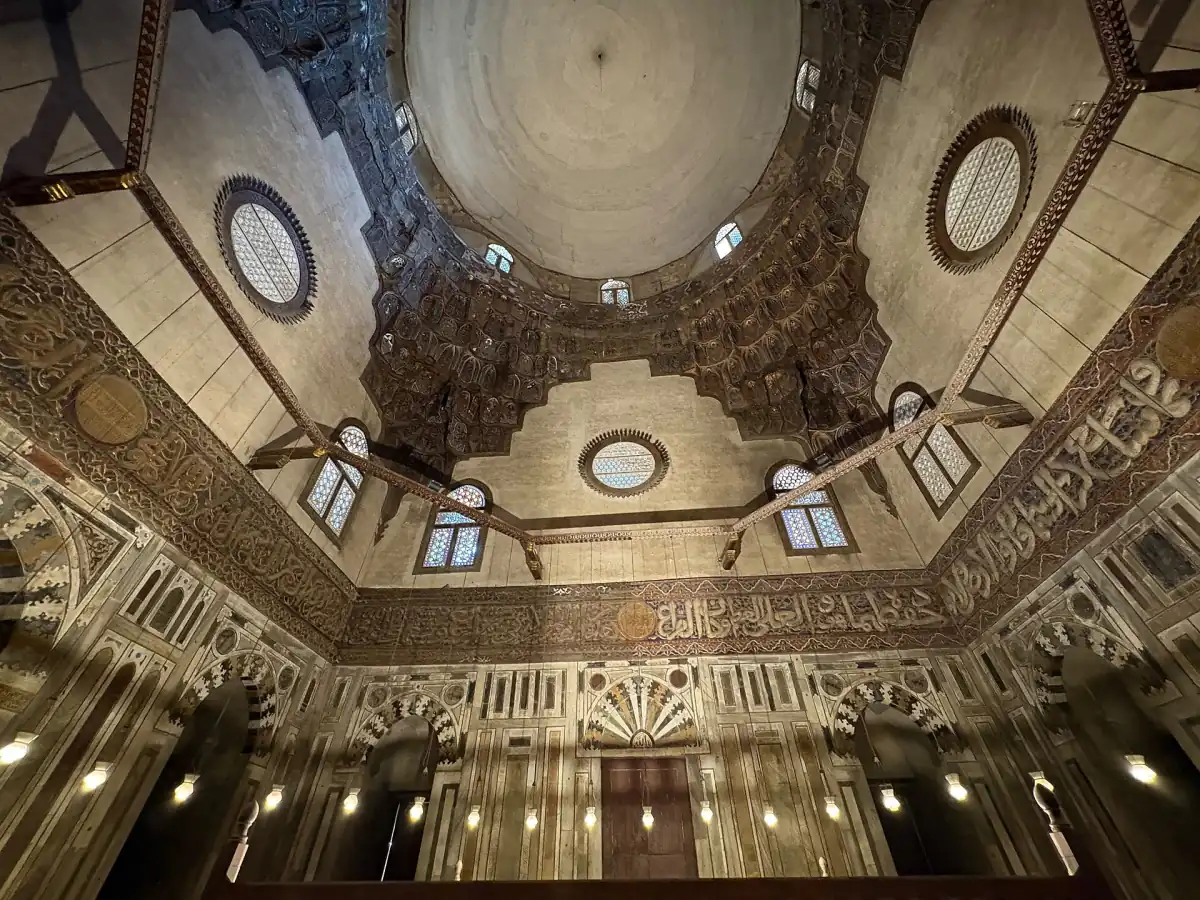
Courtyard, four iwans and four madrasas
The Sultan Hassan complex has a courtyard with a fountain, four iwans and four madrasas for the Sunni schools of law. This arrangement is the key to a focused visit. Look at the relationship between the courtyard and the large spaces opening from it, then consider the educational role alongside the religious one. The building is a mosque and madrasa complex, so learning belongs at the centre of its interpretation.
Use the courtyard as a way of organising what you see. Instead of moving from one decorative detail to another without a framework, return to the question of how the different spaces relate. A guide can explain that arrangement during a visit devoted to the complex. This is especially useful if you want to understand function and layout before broadening the day to other mosque traditions.
Sultan Hassan guided visit
This private guided visit includes tickets and hotel transfers.
Hand-picked tours, booked through GetYourGuide. Prices are indicative starting prices in US dollars (as of October 2026). Tap a tour for live availability and the current price in your currency.
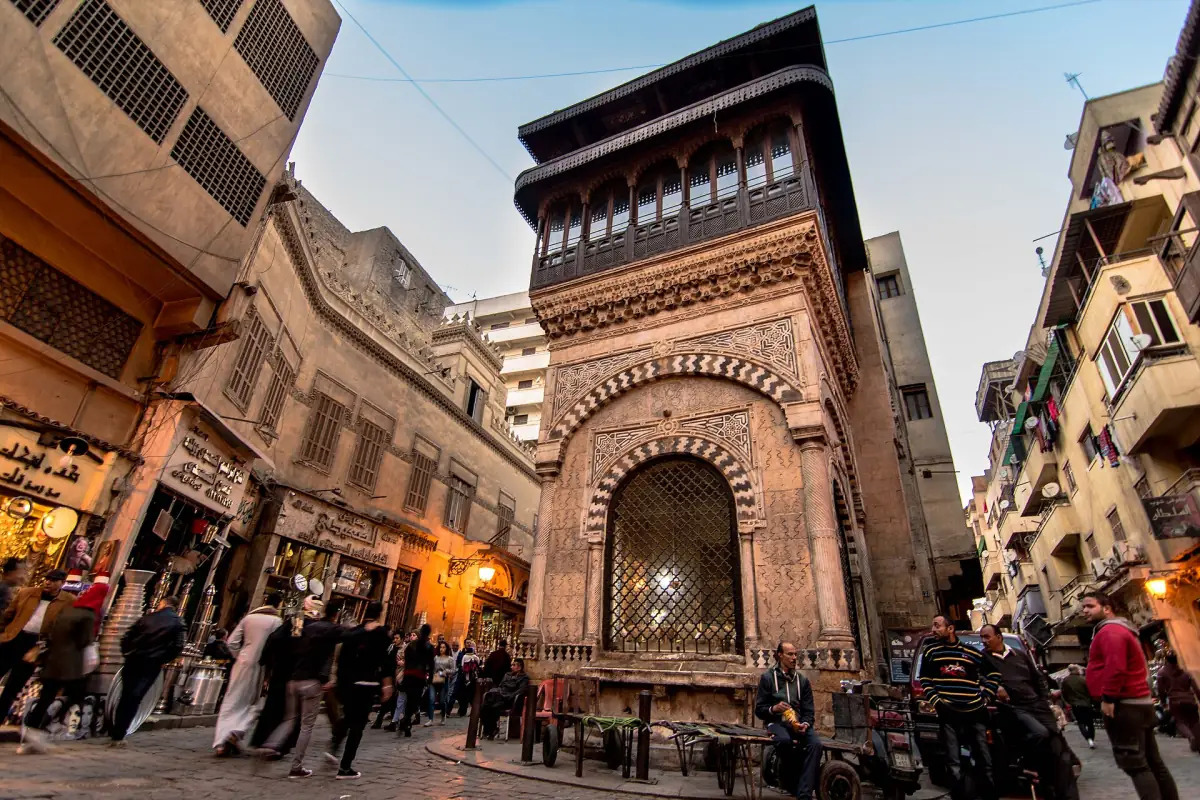
A guided look at Sultan Hassan’s layout
A two-hour Sultan Hassan Mosque and Madrasa visit with a private guide, private car transfers and entrance tickets; the programme also includes a shopping stop.
Rifai, burial places and contrasting building periods
Rifai provides a later comparison across the square. Completed in 1912 after extended interruptions, it combines an area used for prayer with an area serving as a burial place. The antiquities ministry identifies members of the Muhammad Ali dynasty and the last shah of Iran among those associated with its tombs. That function gives a visit another question to consider alongside the courtyard and educational spaces of Sultan Hassan.
Keep the comparison precise: Sultan Hassan introduces a medieval mosque and madrasa arrangement, while Rifai’s later completion and burial role tell a different story. Consider the tomb context as part of the buildings’ wider religious and commemorative functions. The contrast in dates helps distinguish the two structures, but the most useful observation is how their spaces serve different purposes. Discuss any particular room or tomb you wish to see when arranging the visit.
Combined admission and published visiting hours
The published combined ticket for Sultan Hassan and Rifai costs 220 EGP for foreign adults and 110 EGP for foreign students. Both ministry listings give daily visiting hours of 09:00 to 17:00. Plan around that daytime period and the arrangements at the sites themselves. The advertised closing time should not be turned into an assumed last-admission time for a late arrival.
Treat the Sultan Hassan and Rifai ticket separately from a visit to the citadel. The Muhammad Ali Mosque belongs to the citadel admission, which is a different visit and ticket arrangement. If you want both parts in one day, keep their entry arrangements and travel between them distinct. The citadel page explains the hilltop visit; this page concentrates on the pair at the square.
Clothing, photography and considerate visiting
For religious sites, cover shoulders and legs and carry a headscarf. Apply the instructions at the particular building, taking account of worshippers and religious activity. A historical or architectural interest does not change the character of the place as a religious setting. Keep your attention on the available visiting areas and let local directions shape the way you move through them.
For photographs, distinguish public space from the interior of a religious building. The general rules for private noncommercial photography in public areas do not replace site instructions. Egyptian citizens require written consent for photographs, and children must not be photographed. Avoid flash in museums and archaeological sites. If photography is central to your plans, ask about the arrangements for the exact spaces and equipment you intend to use.
A short guided visit focused on Sultan Hassan
The two-hour guided outing offered here focuses on Sultan Hassan Mosque and Madrasa. It includes a private guide, private air-conditioned car transfers, hotel pickup and drop-off, entrance tickets to the mentioned sites and bottled water. A shopping stop is also listed. This format gives the courtyard and madrasa arrangement a specific place in the day instead of making them a brief name on a much longer circuit.
Plan Rifai as a separate addition to that guided programme and ask about its timing if you want to combine the buildings. The tour’s focus is Sultan Hassan; the combined monument ticket and the guided itinerary are different things to organise. Use the tour overview for wider combinations, and the transport guide when deciding how this visit fits around your hotel and other districts.
Questions about your visit
What does the Sultan Hassan and Rifai ticket cost?
The combined ticket is 220 EGP for foreign adults and 110 EGP for foreign students.
When are the buildings open for visitors?
Both ministry listings publish daily hours of 09:00 to 17:00. Arrange the visit within that period and follow local directions.
Does the short guided outing promise a Rifai stop?
The guided itinerary focuses on Sultan Hassan Mosque and Madrasa. Arrange Rifai separately if you want to include it.